 ERPConcept
Ledgerwise
One ERP for stock, purchasing, production and finance.
An ERP for small manufacturers and distributors: multi-warehouse inventory, purchasing with approvals, work orders and a finance ledger in one system.
- Category
- ERP
- Designed for
- Web
Why Ledgerwise exists
The problem
Growing manufacturers run stock in spreadsheets, purchasing in email and finance in an accounting package, so nobody trusts any single number.
The product
Ledgerwise connects inventory, purchasing, production and finance, so every stock movement and approval posts to one ledger automatically.
Built for: Manufacturers and distributors with 20 to 500 staff, several warehouses and a finance team that closes the books every month.
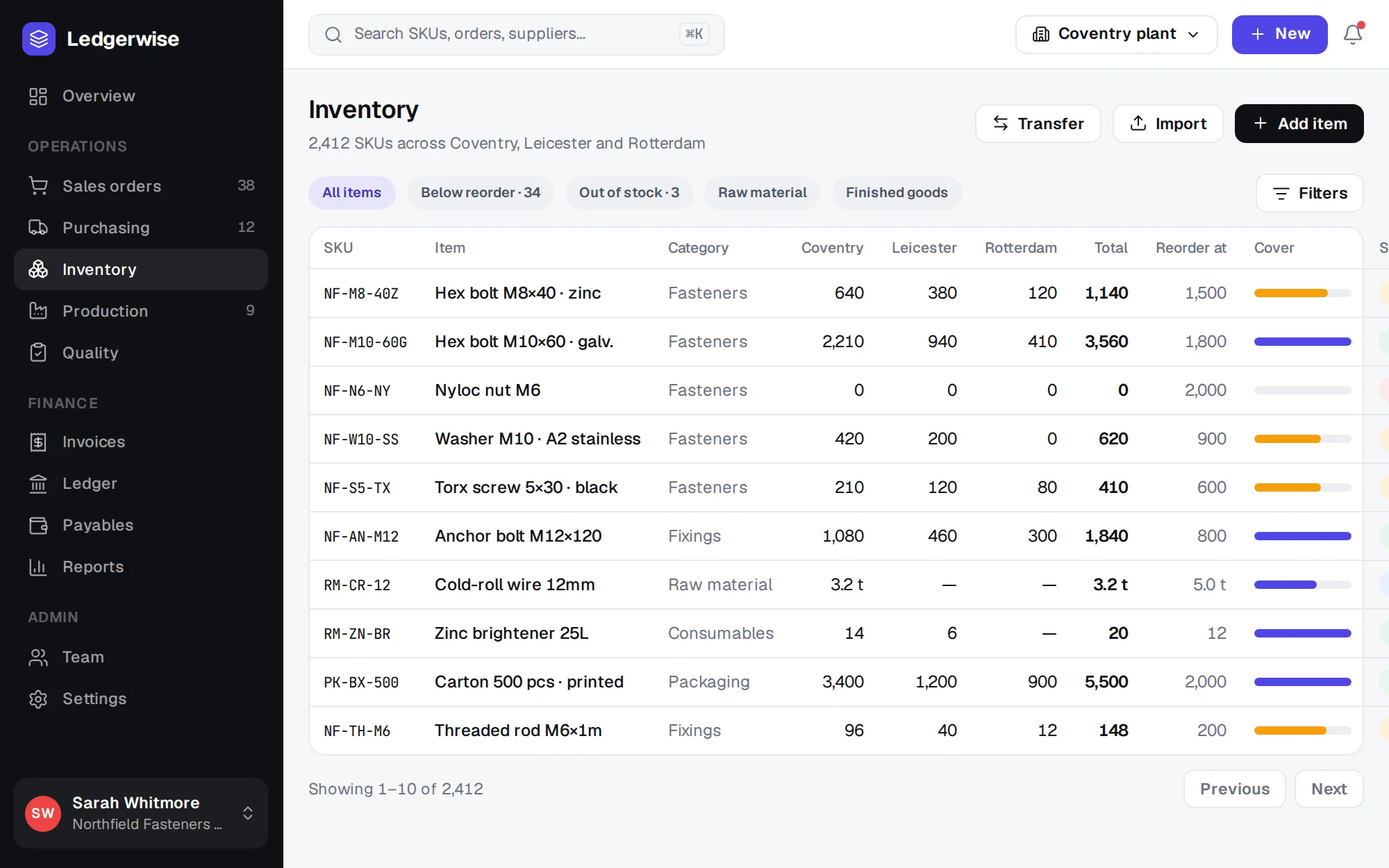
- Multi-warehouse inventory with reorder alerts
- Purchase orders with budget checks and approval flow
- Three-way match of PO, goods receipt and invoice
- Production board for work orders and quality checks
- Sales orders, invoicing and a double-entry ledger
- Role-based access across plants and entities
Walkthrough
Operations And Finance On One Screen
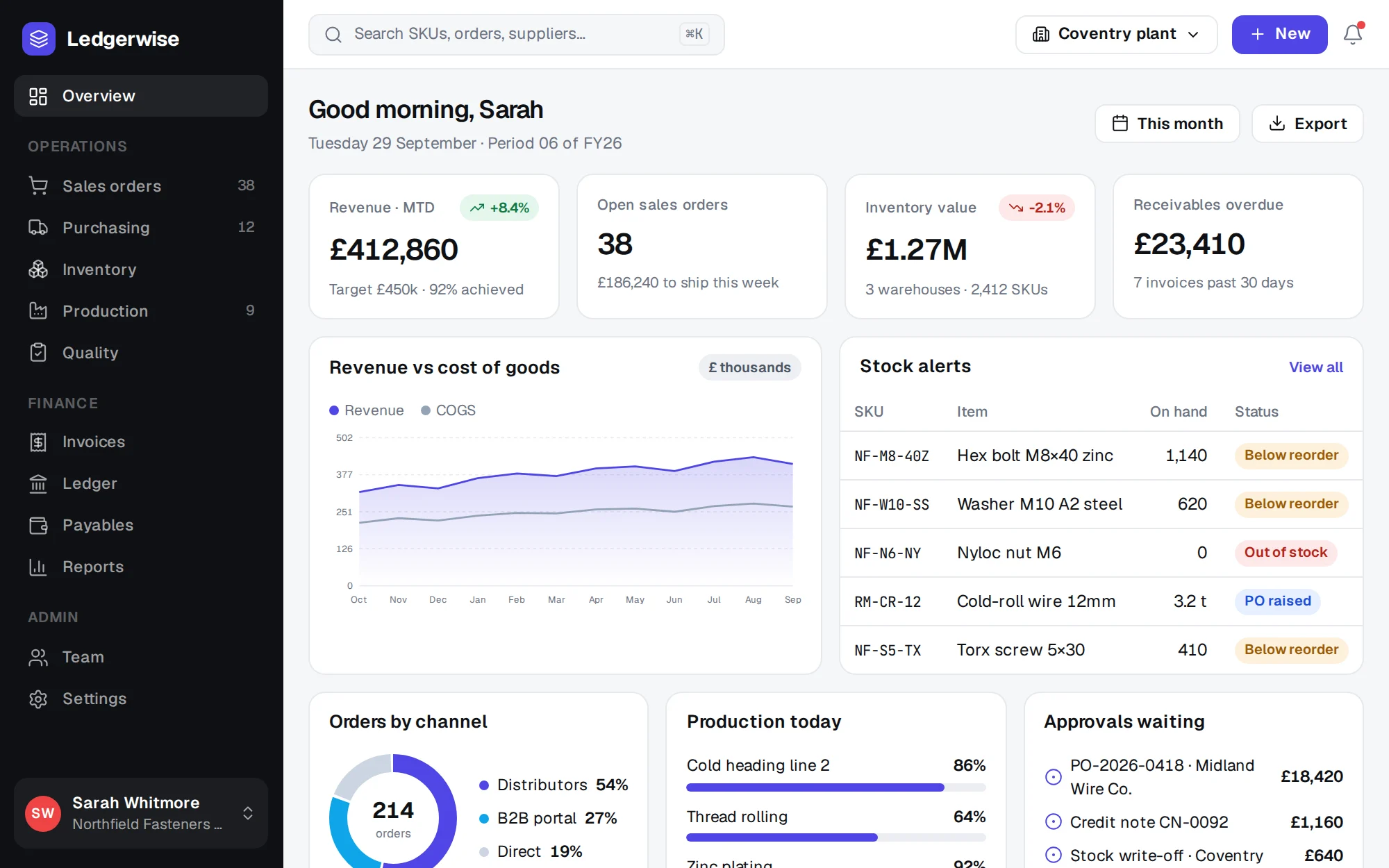
Designed around the daily questions of an operations director: what is short, what needs approving, what is late and how the month is tracking.
- 01
Operations Overview
Revenue against target, open orders, inventory value, overdue receivables and approvals waiting, the moment you sign in.
- 02
Multi-Warehouse Inventory
Stock by SKU across every warehouse, with reorder points, cover and status so shortages are visible before they bite.
- 03
Purchase Orders & Three-Way Match
Line items, supplier performance and an approval flow, with PO, goods receipt and invoice matched before payment.
- 04
Production Board
Work orders move from planned to completed with machine, quantity, due date and quality sign-off on each card.
Every screen
The full experience.
What makes it different
Built So The Numbers Always Agree
Every operational event, from a goods receipt to a finished work order, is a ledger transaction, so stock value and the balance sheet cannot drift apart.
Double-Entry Core
Stock moves, purchases and sales post balanced journal entries, so reports reconcile by construction.
Approvals With Budgets
Purchase orders check the budget and follow an approval chain before they reach a supplier.
Multi-Site By Default
Warehouses, plants and legal entities are separate from the start, with transfers between them.
Full Audit Trail
Who changed what, when and why is recorded on every document for auditors and investigations.
How it’s built
The technology stack.
The architecture we would build this on today, and why each piece earns its place.
- Web app
Next.js (App Router), React, TypeScript, Tailwind CSS
Fast, accessible interfaces with server rendering where it helps
- API
NestJS on Node.js · REST + WebSockets
Typed modules, clear boundaries and live updates for busy screens
- Database
PostgreSQL with row-level security
Relational integrity for money and stock, with tenant isolation in the database itself
- Background jobs
Redis + BullMQ
Imports, emails, reports and integrations run reliably off the request path
- Documents
PDF generation with headless Chromium
Invoices, POs and delivery notes that match the brand exactly
- Integrations
Accounting, bank feed and tax-filing APIs
Connects to what finance already uses rather than replacing it on day one
- Infrastructure
AWS (ECS Fargate, RDS), Terraform, GitHub Actions
Reproducible environments and automated deploys from day one
- Observability
OpenTelemetry, Sentry, structured audit logs
Every error traced and every sensitive change attributable
More inside
From Purchase Order To Month-End.
The screens an operations and finance team would use every week.
Sales Orders & Invoicing
Quotes become orders, orders reserve stock and dispatch triggers the invoice automatically.
Management Reports
Margin by product, stock ageing and cash flow, built on the same ledger finance closes with.
Supplier Scorecards
On-time delivery, quality rejects and spend per supplier, updated with every receipt.
Roles & Entities
Buyers, planners, finance and directors each see what they need, per plant and per company.
What comes next
On the roadmap.
What a second release would add once the first one is in real users’ hands.
- 01Barcode and mobile stock counts
- 02Bank feeds and automated reconciliation
- 03Demand forecasting from sales history
- 04EDI with large customers
- 05Customer portal for order status
Related
Services and industries behind this work.
Concept project
Need Something Like This?
This is concept work: the product design, screens and architecture we would start from. If your business needs an ERP that fits how you actually make and move stock, we can scope a first release with you, usually within a week.
Next project
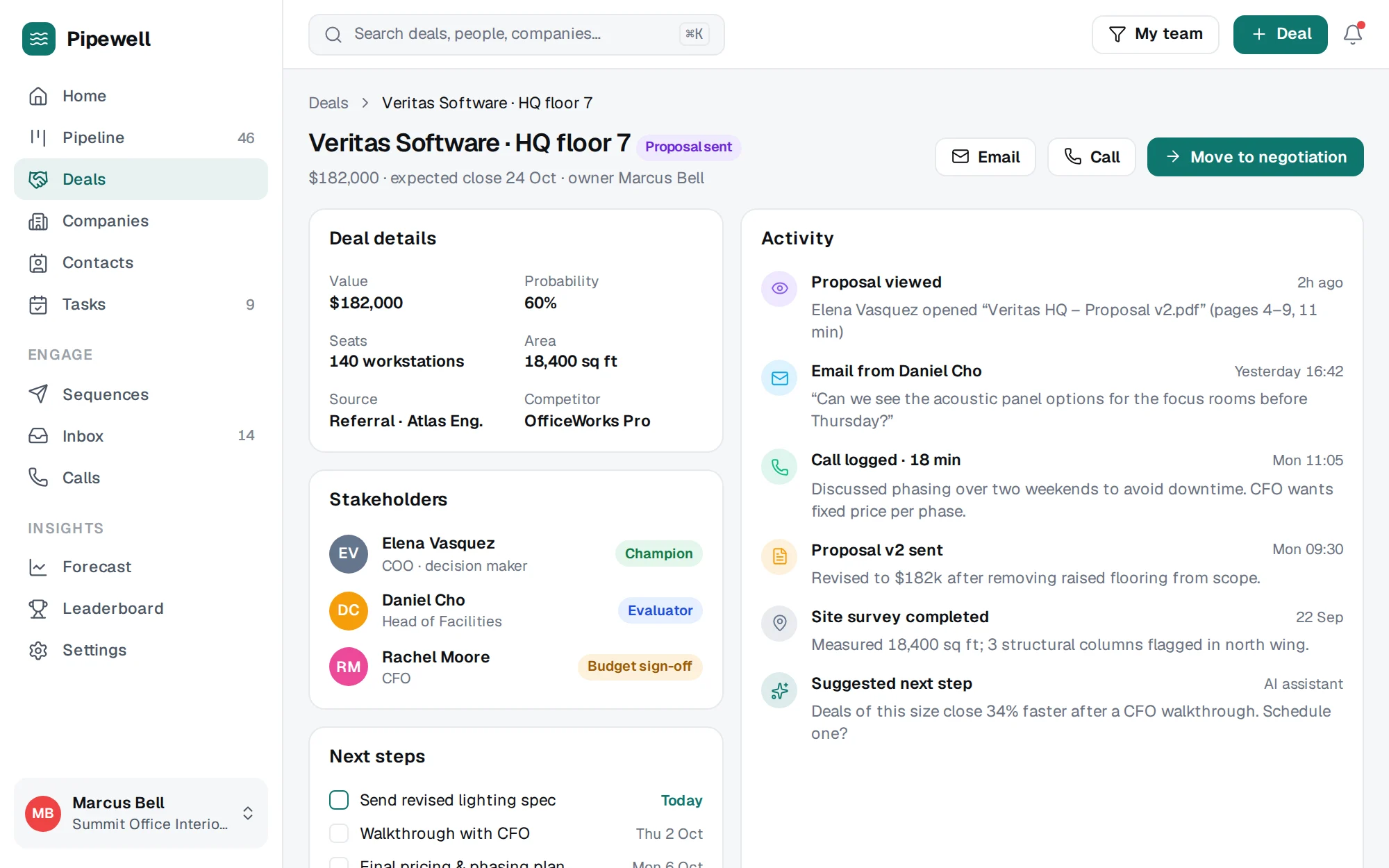
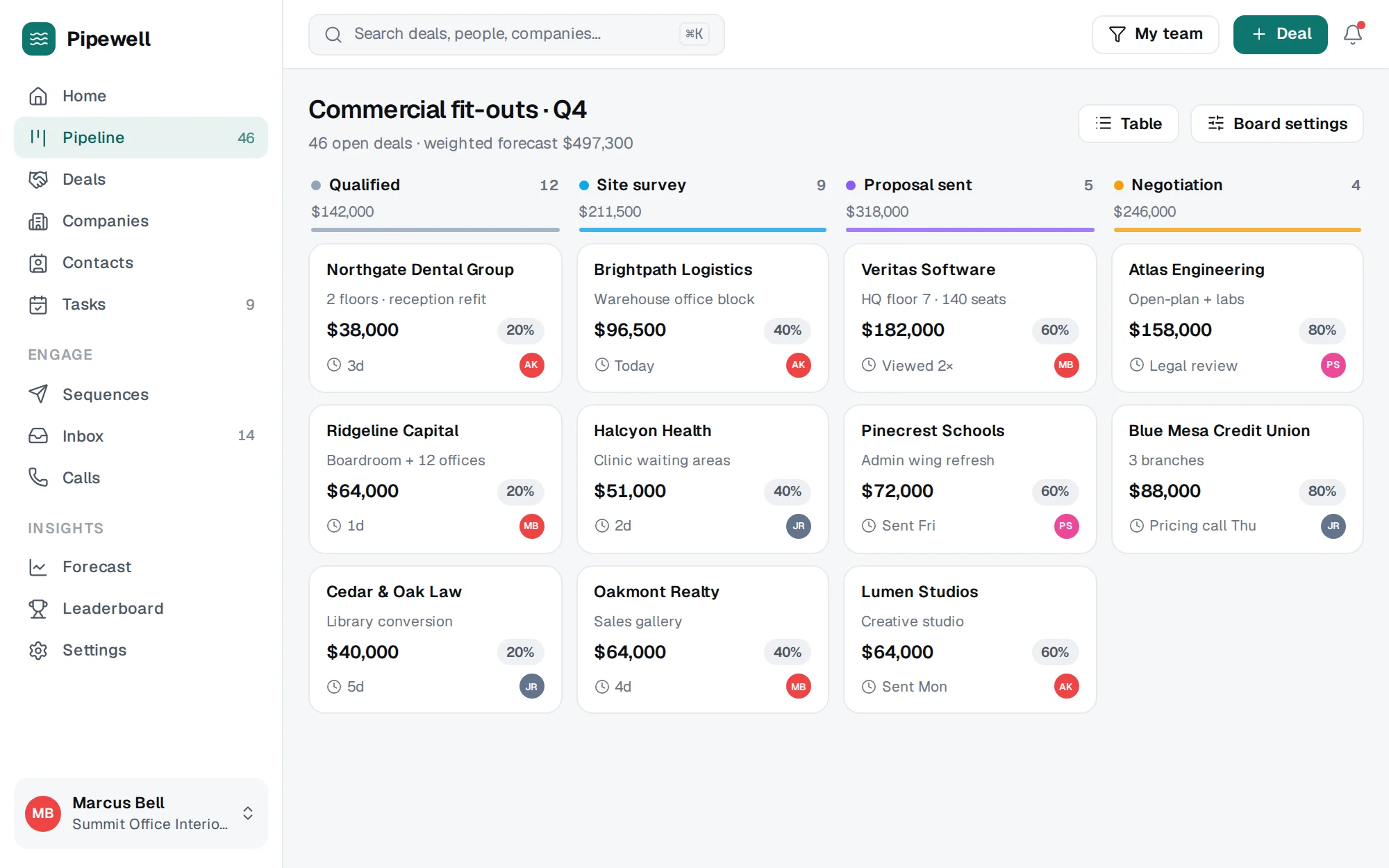
Pipewell
A sales CRM that keeps every deal moving.